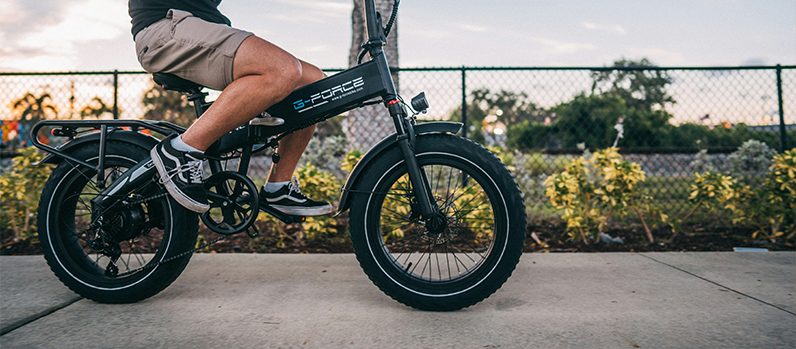
The electric mobility market in Thailand presents significant growth potential for global technology firms particularly in tourist hotspots and campus towns.
Launching a smartphone-app-based electric bicycle (E-Bike) rental service under a foreign-owned business in Thailand requires strict compliance with foreign business laws and transportation laws.
Before importing a vehicle or deploying localized software, foreign operators must understand three critical regulatory awareness that require careful consideration before commencing their operations.
1. BOI Promotion Does Not Automatically Cover e-Bike Application Business
Many foreign technology companies consider applying for investment promotion from the Board of Investment (BOI) under Digital Business category for their software development or digital platforms, with the purpose for BOI incentives which include 100% foreign ownership and other tax benefits.
However, BOI promotion generally applies only to the software development business, which the project income must come from software development fees or subscription fees for using the platform or SaaS fees.
For an e-Bike rental business, in which the revenue model is rental income from users when customers pay to use the physical e-Bikes. This revenue model is treated as income from leasing physical assets, rather than income from software or digital services.
Therefore, it may not qualify for BOI promotion under a software development project. In other words, obtaining BOI promotion for software development does not automatically mean that the company can also operate an e-Bike rental business under the same BOI project.
2. Foreign Ownership
Under the Foreign Business Act B.E. 2542 (1999) (FBA), a vehicle rental business is generally classified as an “Other Service Business” under List Three (21).
This means that a foreign-owned company cannot simply set up a Thai subsidiary and start renting e-Bikes to customers.
If the company wants to remain 100% foreign owned, it will generally need to obtain a Foreign Business License (FBL) from the Department of Business Development (DBD), Ministry of Commerce.
However, obtaining an FBL for a standard rental business can be difficult, particularly where similar services are already available from Thai businesses. The foreign applicant may need to demonstrate special and unique technology, know-how, or other benefits to Thailand to support its application.
Are There Alternative Structuring Options?
There may be alternative corporate structuring options available for foreign investors looking to enter the Thai e-Bike rental market, depending on the specific business model, ownership structure, and applicable regulatory requirements. As these arrangements require careful legal analysis and are assessed on a case-by-case basis, foreign operators are encouraged to contact PKF Thailand’s Legal team to discuss the options that may be suitable for their business.
3. Restrictions under Thai Transportation Laws
Another important issue is how an E-Bike is classified, as this affects whether the vehicle needs to be registered and whether the rider needs a driving license.
Bicycle Category
An e-Bike may qualify as a bicycle without registration or driving license required if it meets the applicable legal requirements of having the functional pedals, a motor power not exceeding 250 Watts, and a maximum speed limit of 25 km/h.
Motorcycle Category
If an electric vehicle does not meet the requirements for a bicycle, it may need to be treated as a motorcycle and comply with the relevant requirements of the Department of Land Transport (DLT), including vehicle registration and driving license.
The 40 km/h Problem
A particular concern is e-Bikes that have pedals but can reach speeds of around 40 km/h.
These vehicles may not meet the requirements for classification as bicycles because they are too fast. At the same time, they may not meet the requirements for registration as motorcycles.
This creates a significant compliance risk if the vehicles are operated on public roads, including tourist areas. For example, operating an unregistered vehicle on public roads may expose the rider to enforcement action. It may also create insurance and liability issues if an accident occurs.
Therefore, foreign operators should confirm the legal classification of the specific e-Bike model before importing a large fleet into Thailand.
Conclusion
Launching an e-Bike sharing platform in Thailand involves more than developing a mobile application and importing e-Bikes. Foreign investors must carefully consider foreign ownership restrictions, BOI requirements, and vehicle classification under Thai transportation laws.
To reduce compliance risks, the appropriate corporate and operational structure should be determined before investing in vehicles, technology, or local operations.
PKF Thailand provides legal and corporate structuring services for international technology and mobility businesses. Our team can assist with ownership structures, BOI matters, business licensing, commercial agreements, and regulatory compliance to help businesses establish their operations in Thailand with a strong legal foundation.
Contact PKF Thailand to discuss how we can help you establish your e-Bike rental business in Thailand.